
The James W. Prothro Student Paper Competition, sponsored by The Odum Institute for Research in Social Science at UNC-Chapel Hill in partnership with the Southern Association for Public Opinion Research (SAPOR) conference, recognizes outstanding student research in public opinion and survey methodology. Named in honor of Dr. James W. Prothro, an esteemed political scientist and former Odum Institute director, the competition awards a $250 prize to the best quantitative student paper and the best qualitative student paper..
We are pleased to announce that Anthoney Garove and Anna Shelton-Ormond have been selected as this year’s winner for their papers.
Quantitative Winner: Anthony Garove
Comparing Error in Estimates of Election Turnout Across Modes Using Official Voter Records: Live-Text Versus Web Surveys
Paper Abstract
Interviewer-administered surveys elicit more socially desirable responding than self- administered surveys across a range of topics. Recent research on emerging smartphone-based survey modes has compared live-text and web modes on response rates, accuracy of survey estimates, and representativeness of the sample, with no study to date comparing socially desirable responding across the two modes. On one hand, the presence of an interviewer in live-text surveys may lead to greater socially desirable responding relative to web. On the other hand, interaction with a live interviewer may increase respondents’ sense of accountability and conscientious responding. However, interviewer presence is relatively low in live-text surveys relative to interviews administered by voice or face-to-face, potentially making either effect modest. We address this research gap using two nationally representative survey experiments of U.S. voters fielded in August and November 2025 in which sampled units from a common sampling frame were recruited by text and randomly assigned to live-text or web modes. We compared respondents’ self-reported turnout in the 2024 U.S. presidential election with official voting records to construct a validated measure of reporting accuracy and decomposed the error in each mode’s estimate of turnout into nonresponse and measurement components. Comparing the error across modes revealed measurement error was significantly lower in live-text than web in the second experiment, with validated nonvoters less likely to overreport turnout in live-text. Our findings suggest that the presence of a live interviewer in text-message surveys does not appear to increase socially desirable responding and might lead to more disclosure of sensitive information.

Anthony Garove is a Ph.D. candidate in Survey and Data Science at the University of Maryland, Joint Program in Survey Methodology. As a Research Fellow at Survey 160, he conducted research on sources of error in survey estimates of election turnout across live-text and text-to-web modes, which received the James W. Prothro Student Paper Award (Quantitative). Anthony’s dissertation research examines the effect of requests for external data linkage consent on socially desirable responding, missing data, and subsequent panel survey participation. He has also co-authored methodological research on mobile app-based data collection for evaluating public transit in Baltimore, MD; was a Data Science for Social Good Fellow at LMU Munich, where he developed visitation forecasting models for the Bavarian Forest National Park; and has held senior research positions in market research and program evaluation.
Qualitative Winner: Anna Shelton-Ormond
Justifying “Old Elitism” as Meritocratic: Neutralizing the Institution and Sentimentalizing Membership Among White Debutante Ball Participants
Paper Abstract
Elites often exhibit unease when acknowledging their status and justify their belonging in elite institutions by invoking meritocratic features, like openness and diversity, opportunities for betterment, and evaluations of individuals’ achievements. Despite this clear “new elite” ethos, certain contemporary elite institutions remain characterized by “old elite” features, like maintaining explicit social and economic boundaries, centering leisure and opulence over skill-building or altruism and favoring family lineage. How do elites experience unease and engage with meritocratic notions as they seek to justify their participation in such institutions? To address this, I examine accounts from participants of the North Carolina Terpsichorean Club debutante ball, a statewide annual presentation of young women to their elite community by a father-figure. This ball is majority-White, expensive to join, non-charitable, and invitation-only based on family lineage and social ties. Through twenty-two in-depth interviews with fifteen debutantes and seven non-butante participants, I find interviewees are uneasily aware of the ball’s “old elite” features of exclusivity, frivolity, and entitlement. However, rather than arguing this is problematic for meritocracy, they reframe the ball as socio-economically inconsequential (i.e., “neutralize the institution”) and themselves as morally motivated by familial loyalty (i.e., “sentimentalize membership”). This suggests that elites can leverage the very features that appear to conflict with meritocracy to uphold institutions and their own participation as meritocratically sound. Such strategies underscore the latitude elites enjoy in justifying institutions that reproduce their status and may help explain the persistence of “old elite” institutions today.
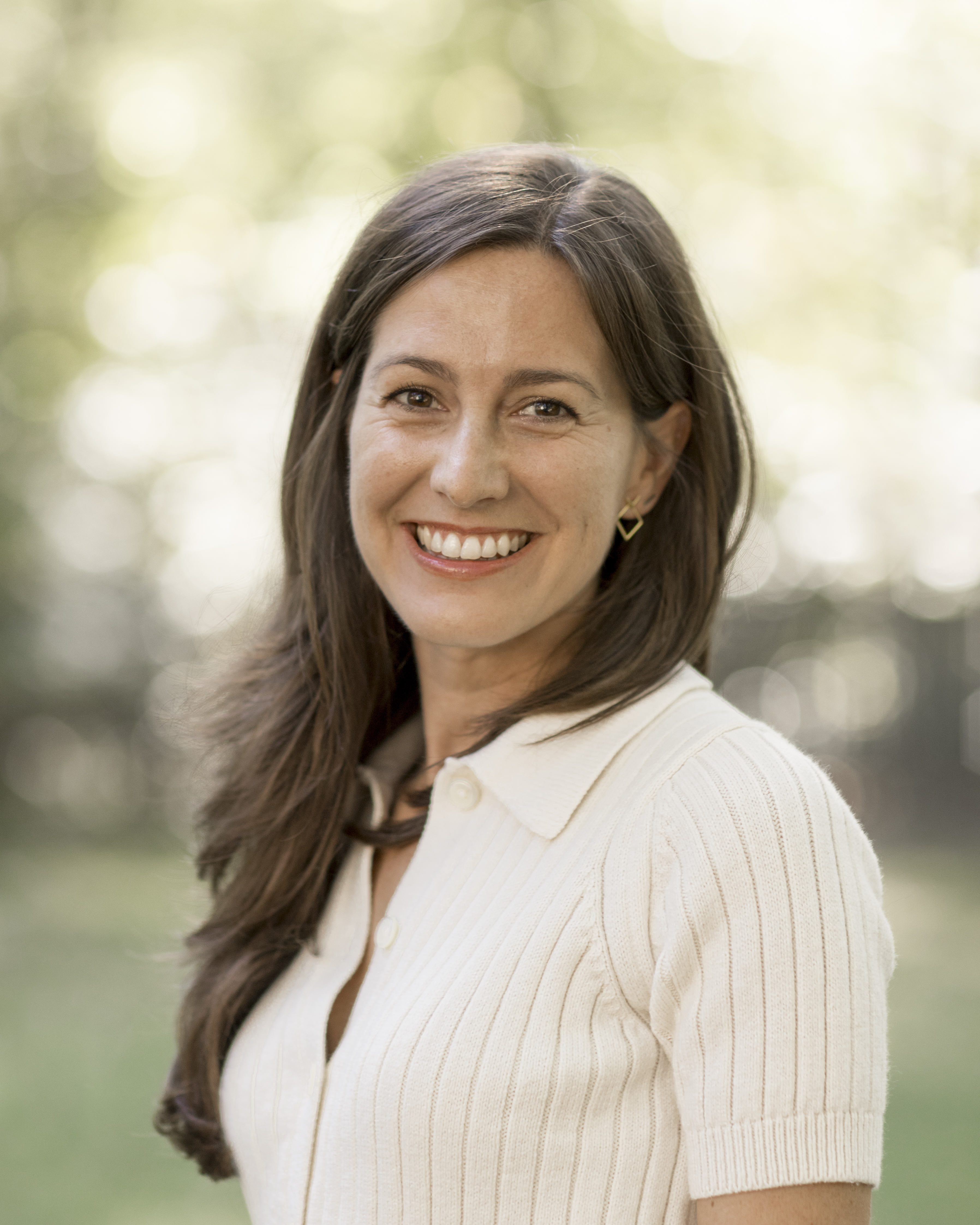
Anna Shelton-Ormond is a doctoral candidate in sociology at UNC-Chapel Hill, originally from eastern North Carolina. She uses qualitative methods to study perceptions of stratification and distributive justice, particularly among those in the top strata of society. Her dissertation project, currently underway, combines in-depth interviews, ethnography, and archival research to examine how “rooted in place” Southern families with historical advantage remember their family’s role in their community’s history. Anna has won awards for both her research and teaching, and the paper she is presenting at SAPOR is forthcoming in Qualitative Sociology. When she’s not conducting research or teaching sociology to undergrads, Anna can be found spending time with family, hosting a movie night with friends, walking her dog, or listening to WUNC’s podcast The Broadside.