
The James W. Prothro Student Paper Competition, sponsored by The Odum Institute for Research in Social Science at UNC-Chapel Hill in partnership with the Southern Association for Public Opinion Research (SAPOR) conference, recognizes outstanding student research in public opinion and survey methodology. Named in honor of Dr. James W. Prothro, an esteemed political scientist and former Odum Institute director, the competition awards a $250 prize to the best student paper.
We are pleased to announce that Inés Martínez Echagüe and Man Zhang have been selected as this year’s winner for their papers.
Equality Takes Work: A Process to Understand Why Women Still Do Most of the Household Labor
Paper Abstract
In the United States, widespread support for gender egalitarianism in the household contrasts with the pattern that women continue to do more household labor than men in different-sex relationships. Existing scholarship has revealed the ways in which different-sex couples justify these unequal arrangements. However, we know little about why women do more labor even when they have egalitarian goals and few structural constraints. I address this question by examining whether and how couples attempt to achieve equality and why they so often fail. Data from 40 in-depth interviews with members of 20 cisgender,different-sex,college-educated couples show that, because unequal household labor patterns are so entrenched, having an egalitarian division of labor itself requires work. I theorize and provide evidence for a process I call “equality work,” the work of creating an egalitarian division of labor, which often falls on women. Equality work includes anticipating inequality, strategizing to avoid it, monitoring equality, speaking up about inequality, fixing unequal outcomes, and withholding work. When men don’t strive for equality, women preserve the relationship by doing the labor their partners do not and revising their ideals. Equality work helps us better understand why women do most of the household labor; paradoxically, doing less requires that women work as well. These findings suggest that women are not passively accepting unequal household arrangements but striving to change them.
Congratulations to Inés Martínez Echagüe on this well-deserved recognition!
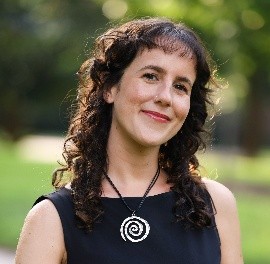
Inés Martínez Echagüe (she/they) is a Doctoral Candidate in Sociology at the University of North Carolina at Chapel Hill and a MA in Gender and Public Policies from the Latin American Faculty of Social Sciences. Her research interests include gender, family, feminism, inequality, and social change processes. In her work, she uses quantitative and qualitative methods, especially in-depth interviewing, to examine how egalitarian and feminist ideals shape the pursuit of more just social relations. Her dissertation, The Feminist Tide and Everyday Gender in Latin America, draws on 70 life-history interviews in Uruguay to examine how widespread feminist mobilizations are shaping cis women and gender minorities’ daily lives. In “Equality Takes Work: A Process to Understand Why Women Still Do Most of the Household Labor,” published in Social Forces, she theorizes women’s work towards creating more egalitarian divisions of household labor, providing a novel explanation for why this work so often fail.
Women’s Labor Force Participation Following Parenthood in China: Cohort Shifts, Educational Variations, and Urban-Rural Differences
Paper Abstract
In the context of consistent declines in women’s labor force participation in China, this study examines the associations of maternal employment trajectories with birth cohort, educational attainment, and urban-rural residency. Using data from the 1991-2015 China Health and Nutrition Survey, I find a substantial decline in mean levels of labor force participation and delayed return to work following motherhood across successive cohorts. I also find significant variations in mean participation rates by educational attainment. Women with a college degree exhibit elevated participation trajectory throughout the first postpartum decade, and the effect of education becomes increasingly salient in more recent cohorts. Furthermore, I find that the cohort shifts and educational variations in maternal employment are not uniform across urban and rural contexts. While urban mothers exhibit lower participation rates on average, urban-rural disparities have narrowed across cohorts and show more complex patterning along the education line. These findings highlight the profound impact of China’s massive social and historical transformations in the post-reform era on maternal labor force participation trajectories and social disparities therein, offering important policy implications for mitigating the motherhood penalty and supporting stable, sustained employment for new mothers.
Congratulations to Man Zhang on this well-deserved recognition!

Man Zhang is a Ph.D. Candidate in Sociology at the University of North Carolina at Chapel Hill. Her research examines how social change influences families, work, health, and inequality over the life course. She uses large-scale population-based survey data and advanced statistical models and methods to uncover complex patterns and mechanisms of inequality across diverse populations.